




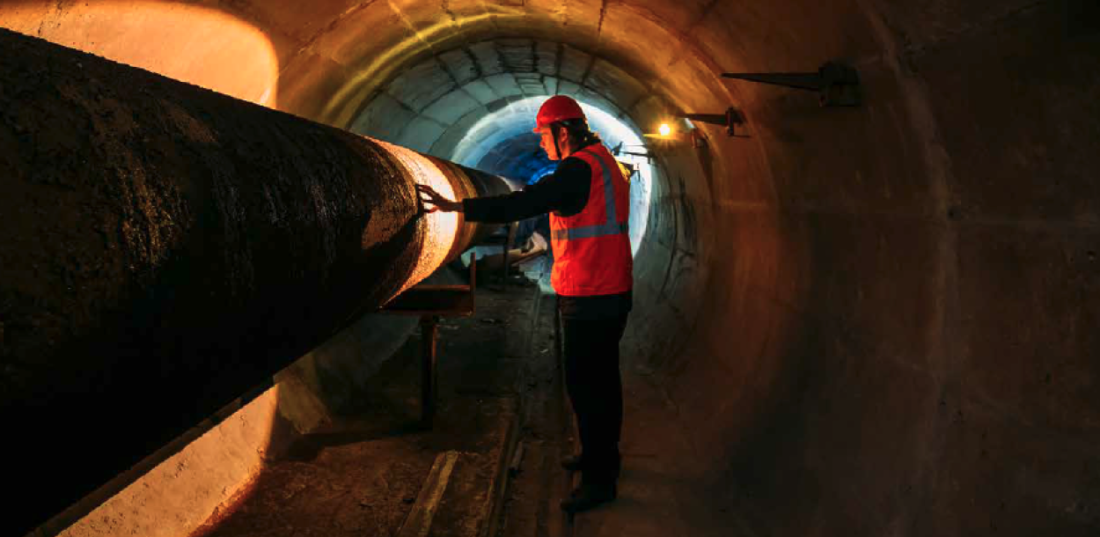
Shifting working hours to help stop fatigue
Tideway Tunnel is a critical engineering project which will fundamentally change the way London deals with its sewage, leading to an environmental benefit for the River Thames and its indigenous wildlife.
The existing system was built back in 1858 by Sir Joseph Bazalgette, in an effort to cope with the increasing sewage emitted by the burgeoning population of the capital city. Originally designed to service four million residents, the 1,100 miles of underground sewer made up of
318 million bricks is still in relatively good condition but it is rapidly being overwhelmed by the current London population of nearly nine million people – more than double its planned-for capacity.
In improving the combined drainage and sewerage system, the Thames Tideway Tunnel will provide the increased capacity needed to tackle the current pollution problem and will futureproof operations for years to come. Alongside the tunnel, which will collect the sewage from toilets, sinks, showers and washing machines, sustainable drainage systems will also play their part.
With less and less green space to soak up rainwater from roads, gutters and pavements, effective drainage is required to reduce the overflow of water across the city. While it is not currently viable to separate the sewer and drainage into two distinct systems, reducing the amount of rainwater entering the structure will contribute to extending the life of the tunnel.
Wider than Big Ben’s clock face and, in some places, deeper than the height of Nelson’s Column, the tunnel being built to extend the capacity of the sewers will be 25 kilometres long. The contractors responsible for creating this mammoth piece of engineering have an ambitious schedule to maintain for the tunnelling to be completed by 2022 and the system to be fully-functioning, tested and in operation by 2024.
Conscious of the scale of the project, from the outset the team at Tideway was determined to be mindful of the wellbeing of all workers involved in all aspects of the work – from management to tunnellers. It was particularly keen that it should address the issue of on-the-job fatigue as presenting a serious risk to safety for all employees and an instruction in the works information detailed that no shift should exceed ten hours.
This was considered to be specifically relevant for those contractors who were engaged in tunnelling.
In initiating this change, Tideway wanted a credible partner to support the implementation of this new approach to defined shift lengths.
With an enviable and well-deserved reputation for innovation and excellence in the field of health and wellbeing for delivering the first-ever Olympic build (London 2012) without a fatality, Park Health was well-known to the Tideway management team and it was felt that they were well-placed to support this ambitious construction programme.
As a result, in 2018 Park Health was brought in to be an integral part of the “The social, cultural and financial needs of the workforce must be considered alongside their personal wellbeing” ongoing analysis of the impact of shorter shifts and for the management of risk associated with fatigue.
“The immediate difficulty with instigating ten-hour shift patterns was overcoming contractor mindset,” explained James
In the main, contractors travel to their jobs, particularly to London sites. For those who have to travel from outside the city, it is a better proposition that they work longer shifts – 12-hours or more – so they can work the same number of hours in less days and then be able to return home for a longer rest period. However, working shorter days and a longer week at Tideway resulted in many contractors spending more time in their rented accommodation.
“Not only did this make those contractors feel frustrated by the change to long-established industry ways of working but many were less rested as, by finishing work earlier and with more time on their hands, they filled their evenings with
other social activities, rather than finishing later and going straight back to their accommodation to sleep,” added James.
The additional effect was the contractors ended-up spending more money on leisure, which defeats the purpose of working away from home and, in itself, creates more dissatisfaction. Conversely, those contractors who live near the site are usually more accepting of shorter days, as it stands to reason it suits them to have more social time every evening as they are at home. Unfortunately, there is not one shift pattern that suits all.
“The intent in introducing shorter shift hours was to reduce fatigue while at work,” explained James, but this became lost in translation and it became more difficult for Tideway to maintain and to recruit the numbers of tunnellers needed for the job.
As a result, our role at Park Health was vital to collaborate with our client Tideway and the contractors to determine if there was a way to effectively monitor shift patterns to better manage fatigue and ultimately, to consider the option of safely extending shift length to 12 hours.
By applying the specialist skills of occupational hygienists and their expertise in fatigue risk management at the construction site, Park was able to collate all available data to analyse each shift. It was possible to apply the information to identify where shifts were being exceeded and by whom and to understand the motivation for going over working hours.
“Each of us taking responsibility for getting enough rest means we contribute to a safer working environment for everyone…”
For some contractors, it was as simple as wanting to beat the traffic or to fit in with the demands of domestic schedule but, for others, the financial incentive was paramount, driving them to find ways to “work around” the stipulations.
Armed with this accurate intelligence, Park was able to use all the relevant data to develop fatigue management plans
and to identify the best times for breaks, hand-over, staggered start and finishes and where alternative tasks, other than hands- on tunnelling such as the digging of shafts, could be undertaken.
Park was able to work with shift leaders to performance manage shift overruns and introduced training to identify the impact of fatigue on employees. An important part of this was developing an awareness in leaders of their own possible fatigue which, in turn, was used to underpin a positive culture of supporting wellbeing in the workplace.
“We were able to implement invaluable risk assessment, training and performance management plans for Tideway, which combined together, has resulted in a thorough understanding of the best- practice approach to dealing with fatigue in a demanding construction environment,” said James.
He added: “Reducing the length of a shift is not a silver bullet when it comes to managing fatigue. The social, cultural and financial needs of the workforce have to be considered alongside their personal wellbeing but, equally, it is the duty of every employee to ensure they get enough rest.
An employer cannot make an employee sleep but recognising that and each of us taking responsibility for getting enough rest means we all contribute to a safer working environment for everyone.”
Download PDF here