



Manual Handling
Today we’re talking about manual handling, hazards, musculoskeletal disorders and why the use of proper technique is vital when working in a high-risk environment.
What is Manual Handling?
Manual handling is all about manual tasks which include any activity where you use your body to lift, push, pull, move or carry objects. Tasks like these occur in most workplaces, especially construction and healthcare. It’s vital to know the safest way to do this to avoid injury to yourself or others. An example of manual handling may include lifting heavy work equipment, moving large objects or working on a conveyor line.
Hazards
Manual handling can cause various musculoskeletal disorders such as sprains and strains, back injuries, and hernias. They can lead to long-term health problems if not managed properly. Therefore, it is important for employers to identify and manage manual handling risks, provide adequate training and equipment, and encourage safe work practices to prevent workplace injuries and improve the health and wellbeing of their employees.
Manual handling risk refers to those conditions that people can be exposed to that may cause them harm in their work tasks or environment. These tasks not done correctly can lead to musculoskeletal disorders which affect the muscles, nerves, blood vessels, ligaments, and tendons. Here are some common manual handling hazards:
Heavy Loads – Carrying a heavy load can cause strain injuries or long term wear and tear. Lifting unwieldy or awkward loads can also be a risk for accidents (falls, slips or trips).
Repetitive Tasks – Performing the same task repeatedly can lead to repetitive strain injuries (RSI). This is common in jobs that require constant moving, particularly of small muscle groups or body parts.
Awkward Postures – Bending, twisting, or reaching can put pressure on the back and other parts of the body, leading to injuries or long term harm.
Poor Environment – Slippery floors, cluttered workspaces or insufficient lighting can increase the risk of accidents during manual handling tasks.
Duration of Activity – Prolonged periods of manual handling without sufficient breaks can result in fatigue, increasing the risk of injury.
Vibration – Regular exposure to vibration, such as when using certain tools, can lead to health issues like Hand-Arm Vibration Syndrome (HAVS).
Temperature – Working in extreme temperatures can affect a person’s ability to safely perform manual handling tasks. Cold can reduce muscular strength and dexterity, and heat can cause fatigue.
Musculoskeletal Disorders (MSDs)
Musculoskeletal disorders (MSDs) are a significant health issue affecting millions of people. Known as MSDs, these are injuries or diseases that affect our body’s movement or musculoskeletal system resulting in pain, limitations of movement or nerve and blood vessel damage. It arises either suddenly or slowly over time due to various risk factors impacting the musculoskeletal system.
Why is Proper Manual Handling Important?
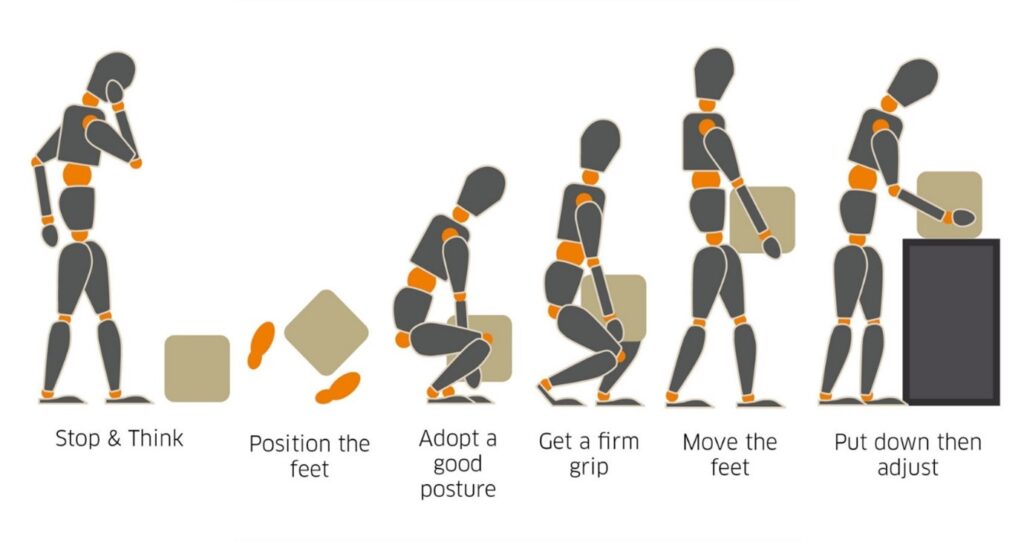
Technique in manual handling can be very important. Alongside other measures from the employer to reduce weights, reduce frequency of movements and provide working methods and lifting aids for the work – everyone should be aware of the physical techniques to ensure you don’t hurt yourself. Some benefits of proper manual handling are;
Improved Workplace Safety – Protecting workers with proper lifting and carrying techniques is important. Keeping the load close to the body and lifting with the thigh muscles rather than the back is an example of safe manual handling. Every worker should be trained to know the best way to do their tasks to minimise any risks or injuries.
Productivity – Good manual handling techniques are essential for efficiency in the workplace. Using correct posture and body mechanics helps reduce strain and fatigue during manual tasks, allowing workers to complete their tasks quickly and safely. This helps increase productivity and efficiency, while also reducing the risk of accidents or injuries.
Prevention of Musculoskeletal Disorders (MSDs) – Incorrect manual handling can lead to a wide range of injuries and health problems, especially MSDs. This can have a serious impact on an individual’s health and well-being. Proper manual handling can help prevent MSDs, as well as other injuries that may arise due to incorrect techniques.
Below are some examples of good manual handling techniques that should be introduced with proper training.