



How our 4Ws Make a Difference
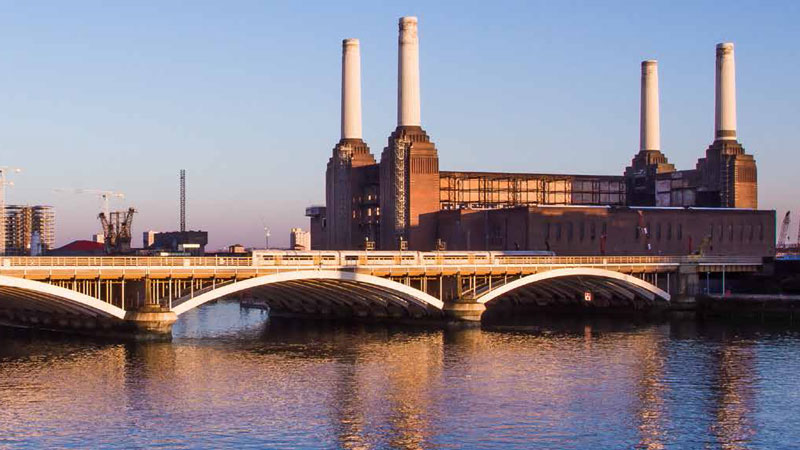
Battersea Power Station is perhaps one of the most iconic buildings on the London skyline. A decommissioned coal-fired power station, located on the south bank of the River Thames, in Nine Elms, Battersea, in the London Borough of Wandsworth, building work began in back in 1929 and finished in 1955. The station is one of the world’s largest brick buildings and is notable for its original art deco interior fittings and decor.
Immortalised in both film and music, it is now at the heart of one of central London’s largest new developments. The £9bn project will see the creation of a vibrant new destination for London, housing a community of homes, shops, cafes, offices, leisure and cultural venues, with more than 19 acres of public space. The outline planning application for the Rafael Vinoly-designed masterplan was approved by Wandsworth Council and the Mayor of London in 2010 and subsequently by the Secretary of State in August 2011.
The project is divided into eight phases, each designed by a range of world-renowned architects, with an overarching Placemaking strategy across all stages of the build. Park Health & Safety was invited on site during the first phase of development in 2014. It was tasked with devising a comprehensive strategy to provide health and wellbeing for all those employees engaged in the renovation of the major works.
The Battersea Power Station Development Company had seen and considered the impact of the exemplary work carried out by Park during London 2012 when it delivered the first Olympic build to be achieved without a fatality and the first client-funded occupational health service to make a return on investment (more than £3 for every £1 spent). Having set this as the gold standard for major projects, the BPSDC was keen to secure Park’s services to deliver this same exacting approach for the Battersea development.
Initially, Park applied its 3Ws framework to deliver health and wellbeing on site. This included:
- WORKPLACE
- Designing-out workplace health risk as far as reasonably possible.
- Profiling, tracking and reducing possible health hazards by the use of Health Hazard Evaluation and Mitigation Plan and health risk assessment.
- Preventing occupational ill–health through exposure to health hazards including: physical hazards such as noise and vibration; chemical & biological hazards including gas, vapour, fume, dust and bacteria; ergonomic stressors such as heavy and/or awkward loads and repetitive tasks; psychological factors such as pressure of work and working time.
- Providing training to all managers and employees, to ensure staff deal with health hazards in the same way as safety hazards and understand the importance of the hierarchy of control in reducing the risk of ill-health.
- WORKER
- Where individuals have an existing health condition or where they experience ill-health, support will be provided to help manage their condition and to remain in work, or return to work while supporting ongoing recovery.
- Monitoring the health of individual workers to highlight suitability of controls (health surveillance); pre-placement fitness (pre-employment screening, safety critical medicals); individual susceptibility (lifestyle and functional capacity assessments); treatment of harm caused (first aid, physiotherapy).
- WELLBEING
- Providing a range of activities and information in the workplace to promote healthy lifestyles and encourage employees to make and sustain positive behaviour changes.
- Promoting wellbeing by using the workplace as a venue to promote healthy lifestyles. However, the Park team very quickly recognised the impact that BPSDC could make within the local community, so rolled-out its fourth “W” element.
- WIDER COMMUNITY
- Assisting wellbeing in the wider community by delivering initiatives that positively impact those surrounding the works.
- Using outreach from the workplace to promote healthy lifestyles to the wider community.
- Using information gained from national and local health data and local Primary Care Trusts to ensure that initiatives and advice offered to both staff and the wider community is based upon relevant local health needs.
As a result, the team at Park made a concerted effort to understand where it could add value to the health agenda for the local community. They talked to local GPs, schools, local NHS bodies and, of course, to local residents. Having actively engaged with the local community, for a time, Park provided nurses to service minor injuries and to act in a first responder role, which was recognised with an award by London Ambulance Service NHS Trust.
In addition to sharing printed information, such as leaflets on women’s health and attending school fairs to talk about healthy eating, the team at Park also offered other initiatives such as training on the use of AEDs, a life-saving tool which is vital in the community. However, as the construction work has progressed at the power station so too has the need for a more complete medical centre. As a result, the Park team was asked to help design a semi-permanent, purpose-built facility to service employees and the community for the duration of the programme. This medical facility, staffed with Park nurses, technicians and occupational hygienists, now offers a suite of treatment rooms and can provide a range of interventions including heart-tracing and asthma support, as well as a minor accident and treatment service.
With the population on-site rising from just over 2,000 people in 2017 to around 3,500 in 2019, overall demand for these services continues to increase year-on-year and, naturally the Park team is pleased to meet the needs of the workers, their families and the surrounding communities For example, the number of health MOTs carried out during the past three years has almost doubled to 475 and the number of people undertaking lifestyle activities has shot up from 349 to 855. In all, the team has seen a 33% increase in demand for health services and wellbeing support.
Melodie Gilbert, Park Senior Partner and Occupational Health Manager explained:
“The long-term nature of this programme, which is due to finish in 2034, means we have a huge number of stakeholders and it is our priority to ensure we maintain the momentum and enthusiasm for our strategy and campaigns as new contractors come on-board, engaging them from the outset so they, in turn, will support their people.
“From a health agenda perspective, the potential for this programme of work is significant and, as such, evaluation of our strategy is critical to ensure we continue to make a difference to the health and wellbeing of the Battersea Power Station employees, their families and local communities.
” Park is currently working on the third phase of the Battersea development and will submit revised plans on a bi-annual basis to ensure its work remains fit-for-purpose and relevant as the renovation progresses to its completion.
“Thank you for the exceptional support you have given me over the last 18 months or so. You have provided excellent, timely advice and been hugely flexible, particularly in response to the Covid situation.”
ANDY RHODES